14th Amendment
The amendment written to secure Black citizenship became the foundation of modern civil rights for every American.
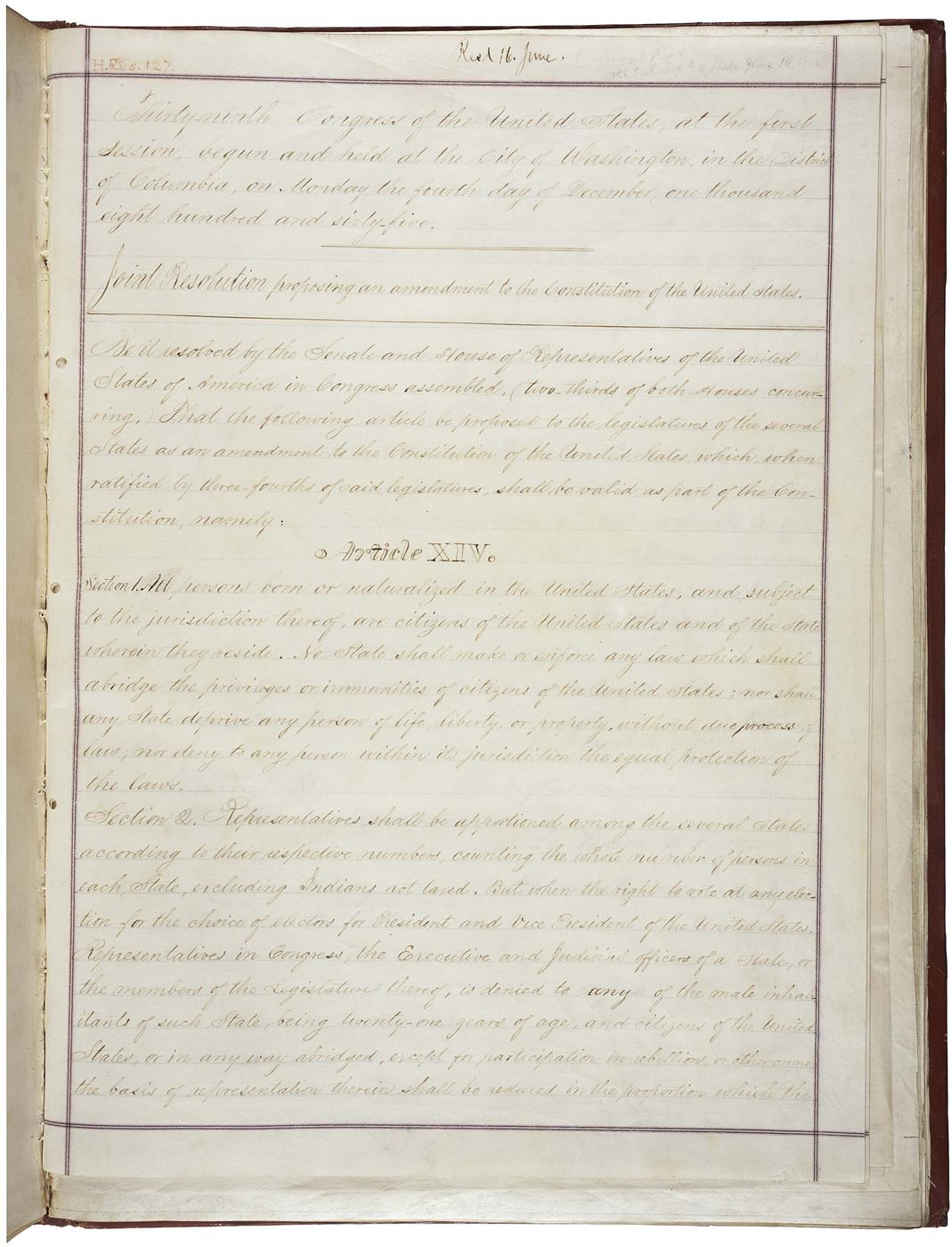
What was happening?
Black Codes and Dred Scott had left freedpeople without secure citizenship.
What happened?
The 14th Amendment made everyone born in the U.S. a citizen and barred states from denying due process or equal protection.
Why?
Congress needed a constitutional guarantee that Southern states could not repeal.
How did Black people respond?
Black conventions, petitions and testimony before Congress about violence in the South built the case for it.
What changed?
Dred Scott was overturned. Citizenship became a birthright.
What happened next?
The Supreme Court narrowed it for decades (Slaughter-House, Cruikshank, Plessy) before it became the backbone of Brown v. Board and later rulings protecting many groups.
How could this still matter today?
It is cited in cases about birthright citizenship, school segregation, sex discrimination, the schooling of immigrant children, and marriage.
Evidence & sources
Evidence rating: What the ratings mean
- Constitutional amendment · 186814th Amendment · National Archives
Citizenship, due process and equal protection.U.S. Const. amend. XIV.
Related stories
- March 6, 1857Dred Scott"No rights which the white man was bound to respect."
- May 17, 1954Brown v. BoardA 20-year legal strategy.
- July 2, 1964Civil Rights Act of 1964The effects went far beyond one population.
Cite this page
APAThe Black American Story. (2026). 14th Amendment. https://www.theblackamericanstory.com/stories/fourteenth/MLA
"14th Amendment." The Black American Story, 2026, https://www.theblackamericanstory.com/stories/fourteenth/. Accessed [date].
Chicago"14th Amendment." The Black American Story. 2026. https://www.theblackamericanstory.com/stories/fourteenth/.