Brown v. Board
The Supreme Court unanimously ruled school segregation unconstitutional.
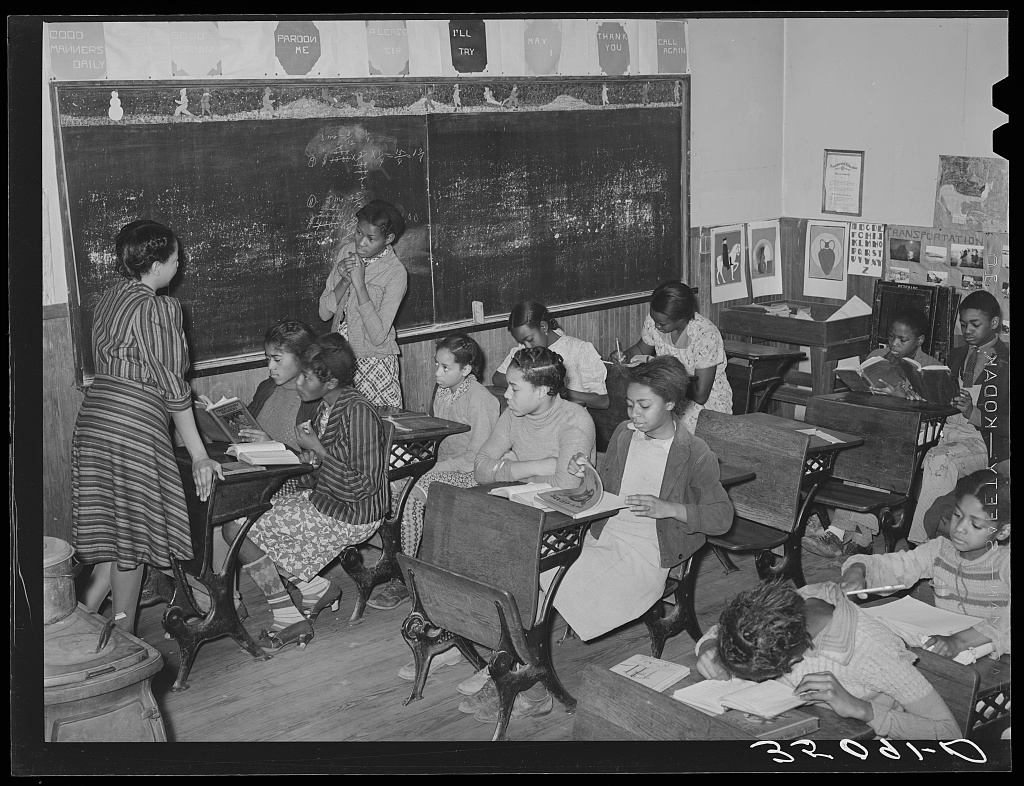
What was happening?
Charles Hamilton Houston and Thurgood Marshall of the NAACP spent two decades building a case against segregation, starting with graduate schools.
What happened?
Brown combined five cases from Kansas, South Carolina, Virginia, Delaware and D.C. The Court ruled 9–0 that segregated public schools violated equal protection.
Why?
The NAACP Legal Defense Fund showed that segregation harmed Black children, including through Kenneth and Mamie Clark's doll studies.
How did Black people respond?
Black families, students and lawyers took enormous risks as named plaintiffs.
What changed?
Plessy's "separate but equal" was overturned in education.
What happened next?
"Massive resistance" followed. Prince Edward County, Virginia, closed its public schools from 1959 to 1964 rather than integrate. Thousands of Black teachers and principals lost their jobs as schools merged.
How could this still matter today?
Many American schools today are again highly segregated by race and income.
Evidence & sources
Evidence rating: What the ratings mean
- Court case · 1954Brown v. Board of Education, 347 U.S. 483 · U.S. Supreme Court
The decision.Brown v. Board of Education, 347 U.S. 483 (1954).
Related stories
- 1892–1896Plessy v. FergusonIt was a planned test case.
- September 1957Little Rock NineNine teenagers. A federal army.
- 1781Elizabeth FreemanShe heard "all men are born free." Then she sued.
- 186814th AmendmentWritten for freedpeople. It protects everyone.
Cite this page
APAThe Black American Story. (2026). Brown v. Board. https://www.theblackamericanstory.com/stories/brown/MLA
"Brown v. Board." The Black American Story, 2026, https://www.theblackamericanstory.com/stories/brown/. Accessed [date].
Chicago"Brown v. Board." The Black American Story. 2026. https://www.theblackamericanstory.com/stories/brown/.