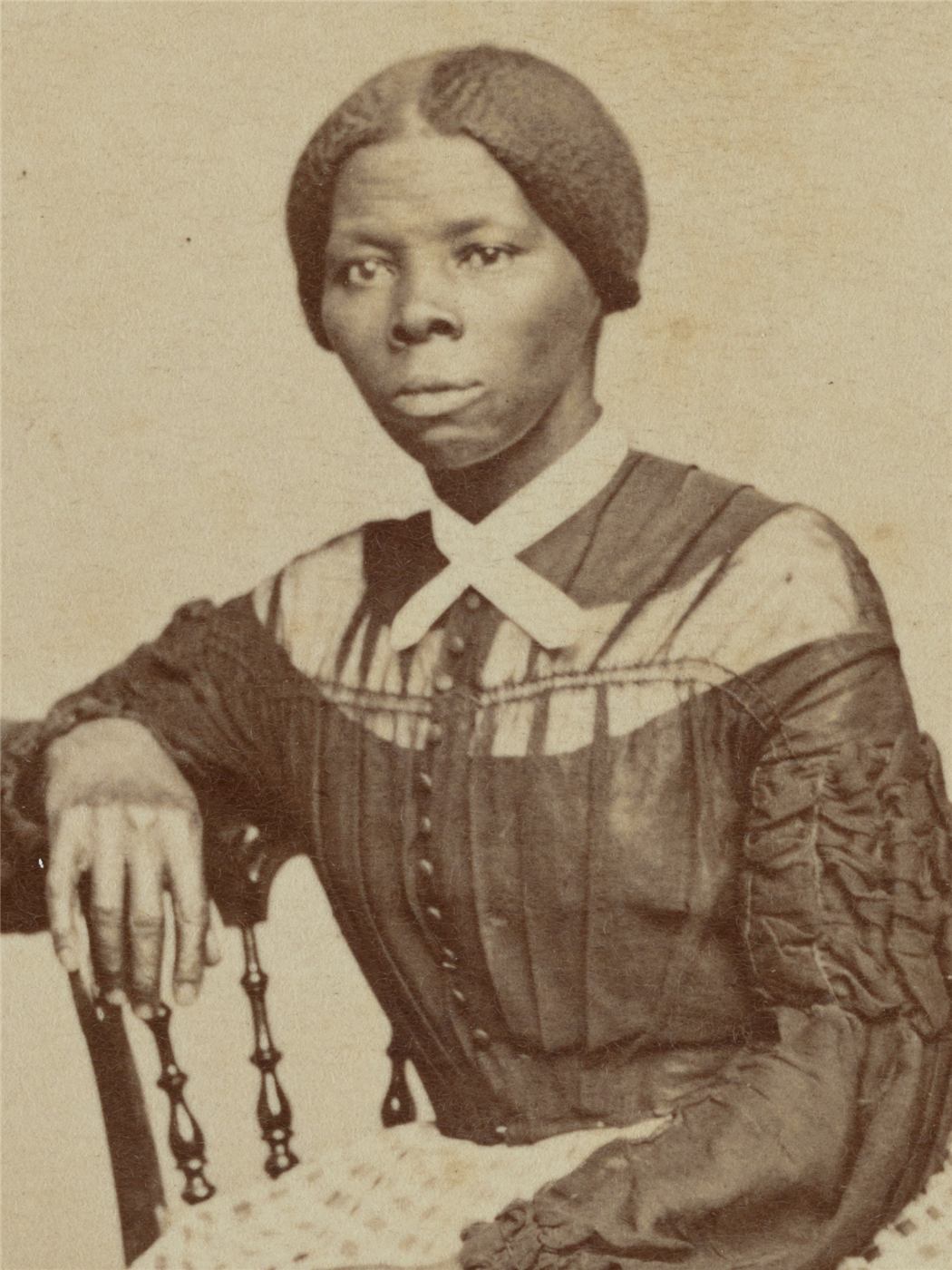
Harriet Tubman
She escaped, came back about thirteen times, and later helped lead a military raid that freed hundreds.
What was happening?
The Fugitive Slave Act of 1850 forced Northern officials to help capture people who escaped. Freedom often meant reaching Canada.
What happened?
Tubman escaped Maryland in 1849, then returned on about thirteen trips to guide roughly seventy people out. In June 1863 she helped lead the Combahee River Raid with Union troops, freeing more than 700 enslaved people in South Carolina.
Why?
She knew the land, the waterways, and the networks of free and enslaved people who made escape possible.
How did Black people respond?
The Underground Railroad was a network of Black communities, churches, and white and Black abolitionists who hid, fed, and moved people north.
What changed?
Hundreds of people gained freedom directly. The raid showed Union commanders the military value of Black intelligence networks.
What happened next?
Tubman served as a scout, spy and nurse. She later fought for decades for a federal pension and became a suffragist.
How could this still matter today?
The plan to put Tubman on the $20 bill has been delayed for years, a running reminder of who is honored and when.
Evidence & sources
Evidence rating: What the ratings mean
- Biography · 2004Bound for the Promised Land: Harriet Tubman · Kate Clifford Larson
Archival reconstruction of Tubman's trips and the number of people she guided.Larson, Ballantine Books, 2004.
Related stories
- May 13, 1862Robert SmallsHe stole a Confederate warship.
- 1863–1865United States Colored Troops179,000 soldiers. They also fought for equal pay.
- Sept 9, 1739Stono RebellionThey marched south toward freedom.
Cite this page
APAThe Black American Story. (2026). Harriet Tubman. https://www.theblackamericanstory.com/stories/tubman/MLA
"Harriet Tubman." The Black American Story, 2026, https://www.theblackamericanstory.com/stories/tubman/. Accessed [date].
Chicago"Harriet Tubman." The Black American Story. 2026. https://www.theblackamericanstory.com/stories/tubman/.