United States Colored Troops
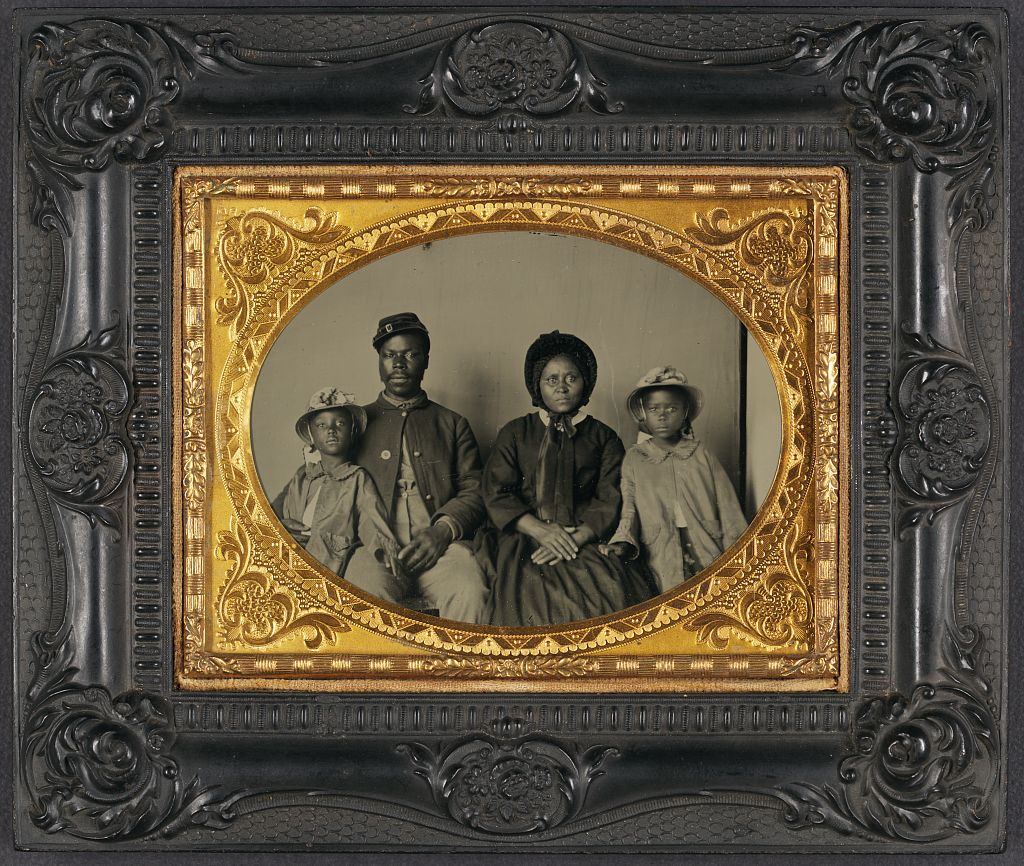
About 179,000 Black men served in the Union Army, roughly a tenth of its force, plus about 19,000 in the Navy.
What was happening?
Enslaved people had been escaping to Union lines since 1861, forcing the question of their status. The Emancipation Proclamation (1863) opened the Army to Black enlistment.
What happened?
The War Department created the Bureau of Colored Troops in May 1863. Black regiments fought at Fort Wagner, Port Hudson, Milliken's Bend, Petersburg and Nashville.
Why?
For many, enlistment was the fastest route to freedom for themselves and their families.
How did Black people respond?
Black soldiers were paid $10 a month, minus a clothing fee, versus $13 for white privates. The 54th Massachusetts refused all pay for eighteen months in protest.
What changed?
Congress equalized pay in 1864. Black military service became a central argument for citizenship and voting rights.
What happened next?
About 40,000 Black soldiers died, mostly from disease. Veterans became leaders during Reconstruction.
How could this still matter today?
Black military service has repeatedly preceded demands for full citizenship: after the Civil War, after both World Wars, and in Vietnam.
Evidence & sources
Evidence rating: What the ratings mean
- Government record · 1863–1865Records of the U.S. Colored Troops (RG 94) · National Archives
Service records, General Order No. 143.Records of the Adjutant General's Office, RG 94, NARA.
Related stories
- May 13, 1862Robert SmallsHe stole a Confederate warship.
- June 19, 1865JuneteenthFreedom arrived two and a half years late.
- 186513th AmendmentRead the exception.
Cite this page
APAThe Black American Story. (2026). United States Colored Troops. https://www.theblackamericanstory.com/stories/usct/MLA
"United States Colored Troops." The Black American Story, 2026, https://www.theblackamericanstory.com/stories/usct/. Accessed [date].
Chicago"United States Colored Troops." The Black American Story. 2026. https://www.theblackamericanstory.com/stories/usct/.