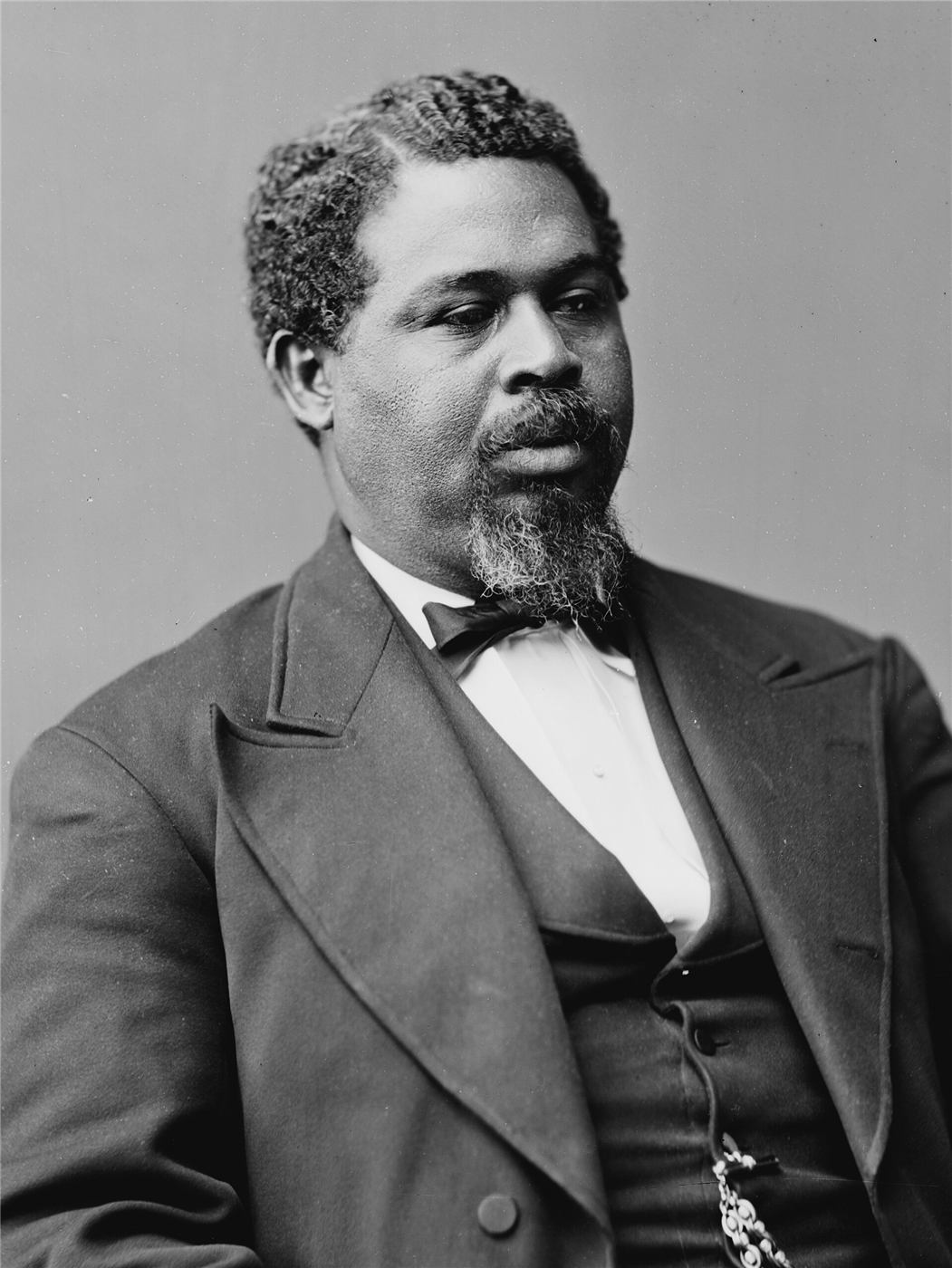
Robert Smalls
An enslaved pilot sailed a Confederate ship past Fort Sumter and delivered sixteen people to freedom.
What was happening?
Smalls was an enslaved man in Charleston who worked as the pilot of the CSS Planter, an armed Confederate transport.
What happened?
On May 13, 1862, Smalls and the enslaved crew took the Planter, picked up their families, steamed past Confederate forts using the correct signals, and surrendered the ship to the Union Navy.
Why?
Freedom for himself and his family, and a chance to strike at the Confederacy.
How did Black people respond?
Smalls lobbied Washington to accept Black soldiers. His escape helped persuade the government to authorize Black enlistment in South Carolina.
What changed?
Sixteen people freed. A warship, guns and intelligence delivered to the Union.
What happened next?
After the war Smalls bought the house of his former enslaver, served in the South Carolina legislature, pushed for public schools, and was elected to Congress five times.
How could this still matter today?
Smalls is a direct link between wartime resistance and Reconstruction power. Most Americans have never heard his name.
Evidence & sources
Evidence rating: What the ratings mean
- Government record · 1862Official Records of the Union and Confederate Navies, Ser. I, Vol. 12 · U.S. Navy
Union naval reports on the Planter's surrender.ORN, Ser. I, Vol. 12, pp. 821–825.
Related stories
- 1863–1865United States Colored Troops179,000 soldiers. They also fought for equal pay.
- 1865–1877ReconstructionBlack political power didn't begin in the 1960s.
- 1849–1863Harriet TubmanYou know her name. Do you know the raid?
Cite this page
APAThe Black American Story. (2026). Robert Smalls. https://www.theblackamericanstory.com/stories/robert-smalls/MLA
"Robert Smalls." The Black American Story, 2026, https://www.theblackamericanstory.com/stories/robert-smalls/. Accessed [date].
Chicago"Robert Smalls." The Black American Story. 2026. https://www.theblackamericanstory.com/stories/robert-smalls/.