Montgomery Bus Boycott
Black residents organized a sustained boycott of the city's segregated buses, and won.
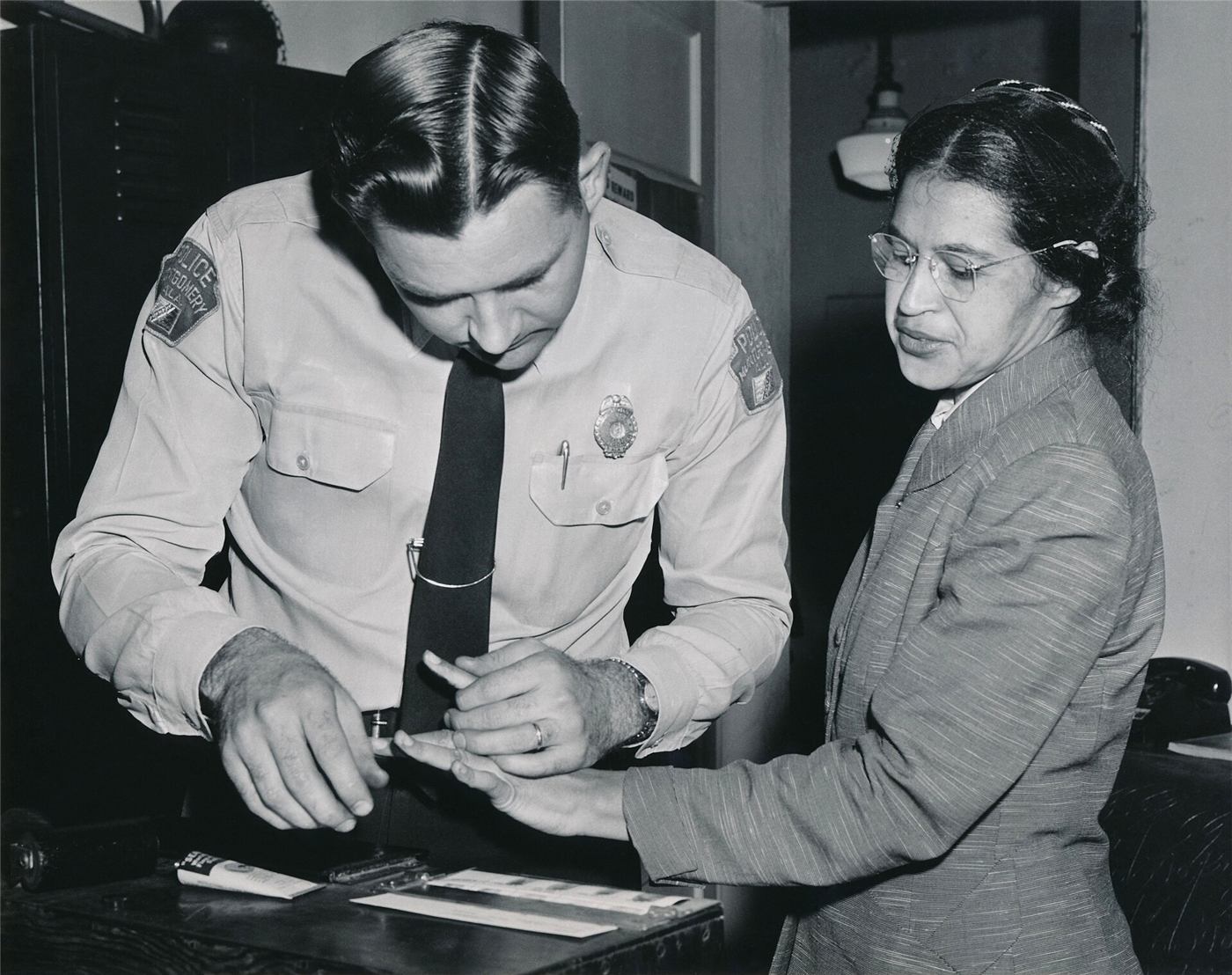
What was happening?
Montgomery's buses forced Black riders to give up seats and enter through the back. Claudette Colvin, 15, had been arrested for refusing in March 1955.
What happened?
After Rosa Parks's arrest on December 1, 1955, the Women's Political Council called a one-day boycott. The new Montgomery Improvement Association, led by 26-year-old Martin Luther King Jr., extended it for 381 days.
Why?
Years of humiliation, and an organized community ready to act.
How did Black people respond?
An organized carpool system, church funding, and a federal lawsuit, Browder v. Gayle, filed on behalf of four Black women including Claudette Colvin.
What changed?
A federal court ruled bus segregation unconstitutional; the Supreme Court affirmed in November 1956. The buses integrated in December.
What happened next?
The boycott launched King's leadership and led to the founding of the SCLC in 1957.
How could this still matter today?
Economic power, organized collectively, can force change.
Evidence & sources
Evidence rating: What the ratings mean
- Court case · 1956Browder v. Gayle, 352 U.S. 903 · U.S. Supreme Court
Affirmed the ruling against bus segregation.Browder v. Gayle, 142 F. Supp. 707 (M.D. Ala. 1956), aff'd 352 U.S. 903.
Related stories
- Feb 1, 1960Greensboro Sit-insFour freshmen sat down.
- April–May 1963Birmingham, 1963The children marched.
- July 2, 1964Civil Rights Act of 1964The effects went far beyond one population.
Cite this page
APAThe Black American Story. (2026). Montgomery Bus Boycott. https://www.theblackamericanstory.com/stories/montgomery/MLA
"Montgomery Bus Boycott." The Black American Story, 2026, https://www.theblackamericanstory.com/stories/montgomery/. Accessed [date].
Chicago"Montgomery Bus Boycott." The Black American Story. 2026. https://www.theblackamericanstory.com/stories/montgomery/.