Greensboro Sit-ins
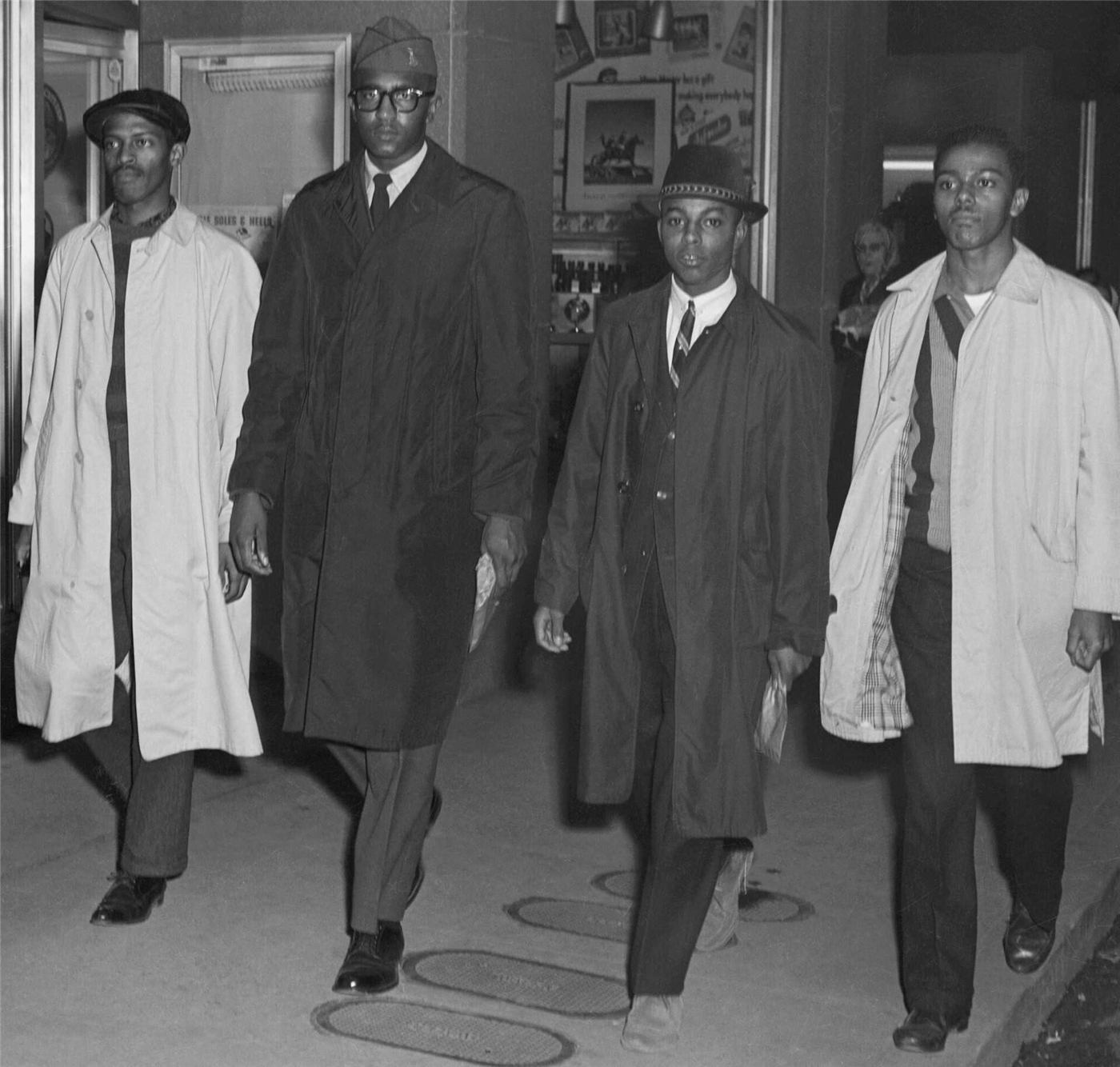
Four college students sat at a whites-only lunch counter, and set off a national student movement.
What was happening?
Segregated lunch counters were a daily humiliation in stores that happily took Black customers' money elsewhere.
What happened?
Ezell Blair Jr., Franklin McCain, Joseph McNeil and David Richmond of North Carolina A&T sat at the Woolworth's counter and refused to leave. Within weeks, sit-ins had spread to dozens of cities.
Why?
They were tired of waiting.
How did Black people respond?
In April 1960, Ella Baker convened students at Shaw University, where they founded SNCC.
What changed?
Woolworth's Greensboro counter integrated in July 1960.
What happened next?
SNCC became central to the Freedom Rides, voter registration in Mississippi, and Selma.
How could this still matter today?
A section of the counter is in the Smithsonian.
Evidence & sources
Evidence rating: What the ratings mean
- Museum object · 1960Greensboro lunch counter · Smithsonian NMAH
Section of the original counter.National Museum of American History.
Related stories
- Dec 5, 1955–Dec 20, 1956Montgomery Bus Boycott381 days. Who organized it?
- May 1961Freedom RidesThey rode into the fire.
- Summer 1964Freedom SummerThree organizers vanished.
Cite this page
APAThe Black American Story. (2026). Greensboro Sit-ins. https://www.theblackamericanstory.com/stories/greensboro/MLA
"Greensboro Sit-ins." The Black American Story, 2026, https://www.theblackamericanstory.com/stories/greensboro/. Accessed [date].
Chicago"Greensboro Sit-ins." The Black American Story. 2026. https://www.theblackamericanstory.com/stories/greensboro/.