East St. Louis, 1917
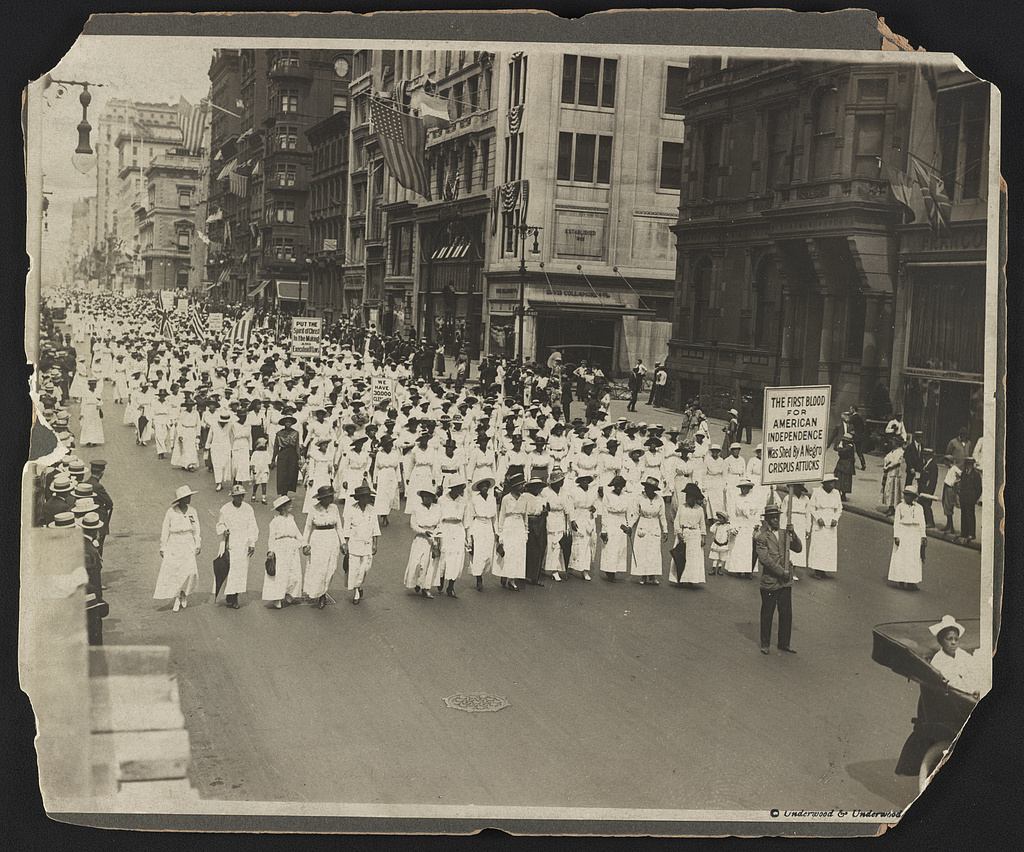
White mobs attacked Black migrant workers. Weeks later, Harlem answered with a silent parade.
What was happening?
Factories recruited Black workers from the South during World War I, sometimes as strikebreakers. White workers and politicians stoked resentment.
What happened?
White mobs burned Black homes and attacked Black residents. The official count was 39 Black and 9 white deaths; investigators and journalists believed the Black toll was much higher. About 6,000 Black residents were driven from their homes.
Why?
Labor conflict, migration, and political incitement.
How did Black people respond?
On July 28, 1917, the NAACP led the Silent Parade down Fifth Avenue: about 10,000 people marching without a word.
What changed?
A congressional committee investigated. The Silent Parade became a model for mass protest.
What happened next?
Two years later came the Red Summer.
How could this still matter today?
The Silent Parade is one of the first mass civil rights demonstrations in American history.
Evidence & sources
Evidence rating: What the ratings mean
- Congressional report · 1918Report of the Special Committee to Investigate the East St. Louis Riots · U.S. House of Representatives
Congressional investigation.H.R. Doc. No. 65-1231 (1918).
Related stories
- July 27, 1919Chicago, 1919It began at a segregated beach.
- 1910–1970The Great MigrationSix million people moved.
- 1892Ida B. WellsShe investigated what America wanted ignored.
Cite this page
APAThe Black American Story. (2026). East St. Louis, 1917. https://www.theblackamericanstory.com/stories/east-st-louis/MLA
"East St. Louis, 1917." The Black American Story, 2026, https://www.theblackamericanstory.com/stories/east-st-louis/. Accessed [date].
Chicago"East St. Louis, 1917." The Black American Story. 2026. https://www.theblackamericanstory.com/stories/east-st-louis/.