The Second Middle Passage
Cotton made enslaved people the single most valuable asset in the American economy.
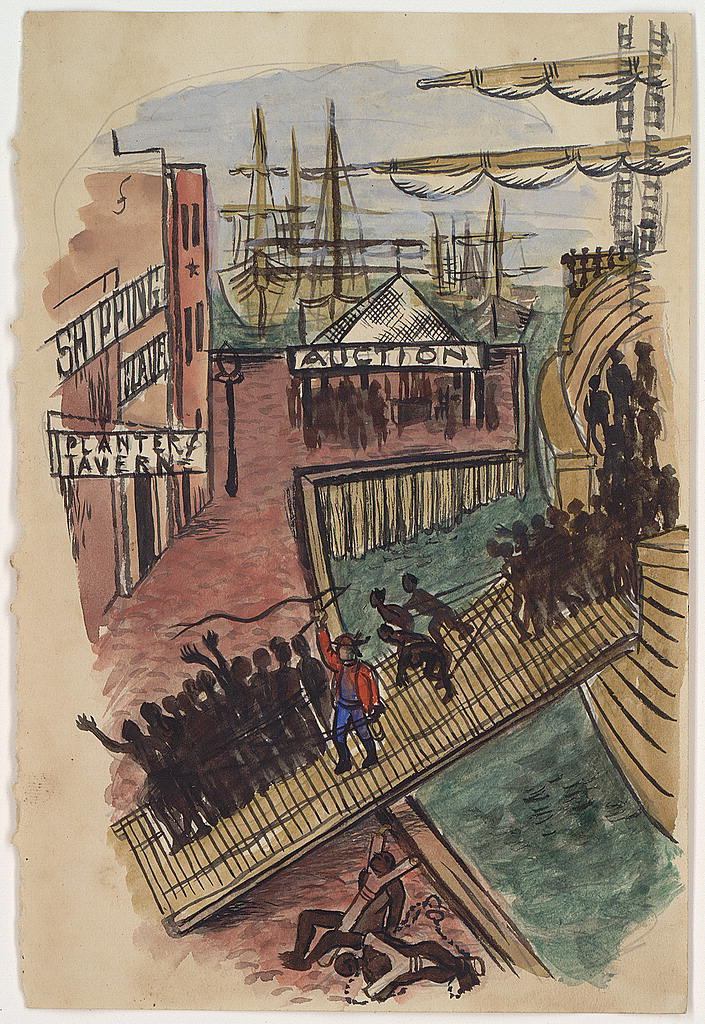
What was happening?
After the cotton gin (1793) and the 1808 import ban, demand for enslaved labor in the Deep South exploded.
What happened?
Roughly one million enslaved people were forcibly moved from Virginia, Maryland and the Carolinas to Alabama, Mississippi, Louisiana and Texas, many through slave markets in Richmond, Alexandria and New Orleans.
Why?
Prices for enslaved people were high in the cotton South. Selling people was how Upper South enslavers turned their "assets" into cash.
How did Black people respond?
Families tried to stay connected across sales, placed newspaper ads searching for relatives after emancipation, and resisted through escape, slowdowns and sabotage.
What changed?
By 1860, about 3.9 million people were enslaved. Their market value was larger than the nation's investment in railroads and factories combined, according to economic historians.
What happened next?
Cotton became the country's leading export, tying Northern banks, insurers and textile mills to slavery.
How could this still matter today?
Many financial institutions have since documented their own historical ties to slavery through policies, loans and insurance on enslaved people.
Evidence & sources
Evidence rating: What the ratings mean
- Census · 18601860 U.S. Census: Slave schedules · National Archives
Recorded 3,953,760 enslaved people.U.S. Census Bureau, Population of the United States in 1860. - Scholarship · 2005Carry Me Back: The Domestic Slave Trade in American Life · Steven Deyle
Estimates of the trade and the market value of enslaved people.Deyle, Oxford University Press, 2005.
Related stories
- 1500s–1860sThe Middle Passage12.5 million people were forced aboard.
- 1849–1863Harriet TubmanYou know her name. Do you know the raid?
- March 6, 1857Dred Scott"No rights which the white man was bound to respect."
Cite this page
APAThe Black American Story. (2026). The Second Middle Passage. https://www.theblackamericanstory.com/stories/domestic-trade/MLA
"The Second Middle Passage." The Black American Story, 2026, https://www.theblackamericanstory.com/stories/domestic-trade/. Accessed [date].
Chicago"The Second Middle Passage." The Black American Story. 2026. https://www.theblackamericanstory.com/stories/domestic-trade/.