The Vote, Taken
Southern states rewrote their constitutions to strip Black men of the vote, and it worked almost completely.
What was happening?
Despite violence, Black men were still voting in significant numbers in the 1880s and 1890s.
What happened?
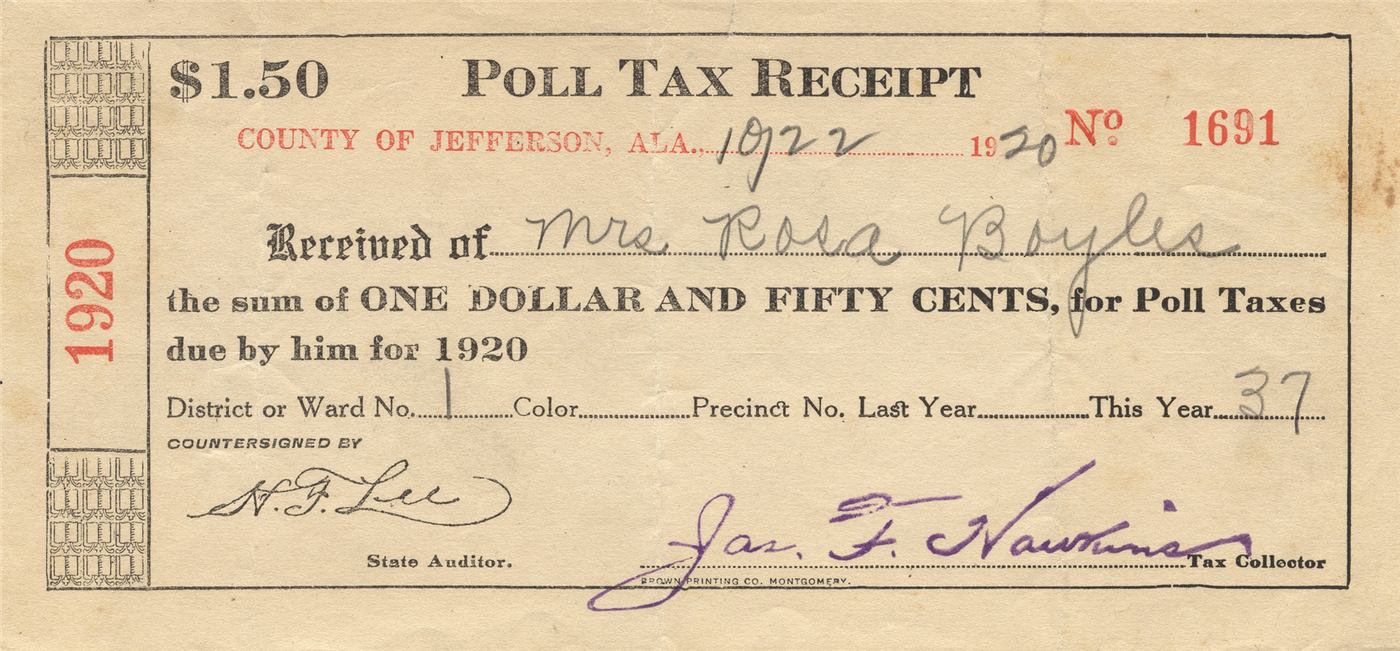
Starting with Mississippi in 1890, Southern states adopted poll taxes, literacy tests, "understanding" clauses and grandfather clauses. In Louisiana, registered Black voters fell from about 130,000 in 1896 to about 1,300 in 1904.
Why?
The goal was openly stated by delegates: to restore white political control without technically violating the 15th Amendment.
How did Black people respond?
Black litigants challenged the laws. The NAACP won Guinn v. United States (1915) striking down grandfather clauses, and later Smith v. Allwright (1944) against white primaries.
What changed?
Black political representation in the South nearly vanished for six decades.
What happened next?
This is why voting rights became the core of the 1960s movement.
How could this still matter today?
Who can vote, and how easily, is still contested in courts and legislatures.
Evidence & sources
Evidence rating: What the ratings mean
- Official report · 1896–1904Louisiana Secretary of State registration reports · State of Louisiana
Source of the registration figures widely cited by historians.Report of the Secretary of State of Louisiana, 1896–1904. - Court case · 1915Guinn v. United States, 238 U.S. 347 · U.S. Supreme Court
Struck down Oklahoma's grandfather clause.Guinn v. United States, 238 U.S. 347 (1915).
Related stories
- 1865–1877ReconstructionBlack political power didn't begin in the 1960s.
- March 7, 1965SelmaIt started with a local voters' league.
- Aug 6, 1965Voting Rights ActIn Mississippi, registration went from 7% to 60%.
Cite this page
APAThe Black American Story. (2026). The Vote, Taken. https://www.theblackamericanstory.com/stories/disenfranchisement/MLA
"The Vote, Taken." The Black American Story, 2026, https://www.theblackamericanstory.com/stories/disenfranchisement/. Accessed [date].
Chicago"The Vote, Taken." The Black American Story. 2026. https://www.theblackamericanstory.com/stories/disenfranchisement/.