Selma
State troopers beat marchers on the Edmund Pettus Bridge. Five months later, the Voting Rights Act became law.
What was happening?
In Dallas County, Alabama, only a tiny fraction of eligible Black residents were registered. The Dallas County Voters League, led by Amelia Boynton and others, had been organizing for years.
What happened?
After a state trooper shot Jimmie Lee Jackson in nearby Marion, about 600 marchers led by John Lewis and Hosea Williams set out for Montgomery on March 7. Troopers attacked them on the bridge with clubs and tear gas.
Why?
To demand voting rights, and to answer Jackson's killing.
How did Black people respond?
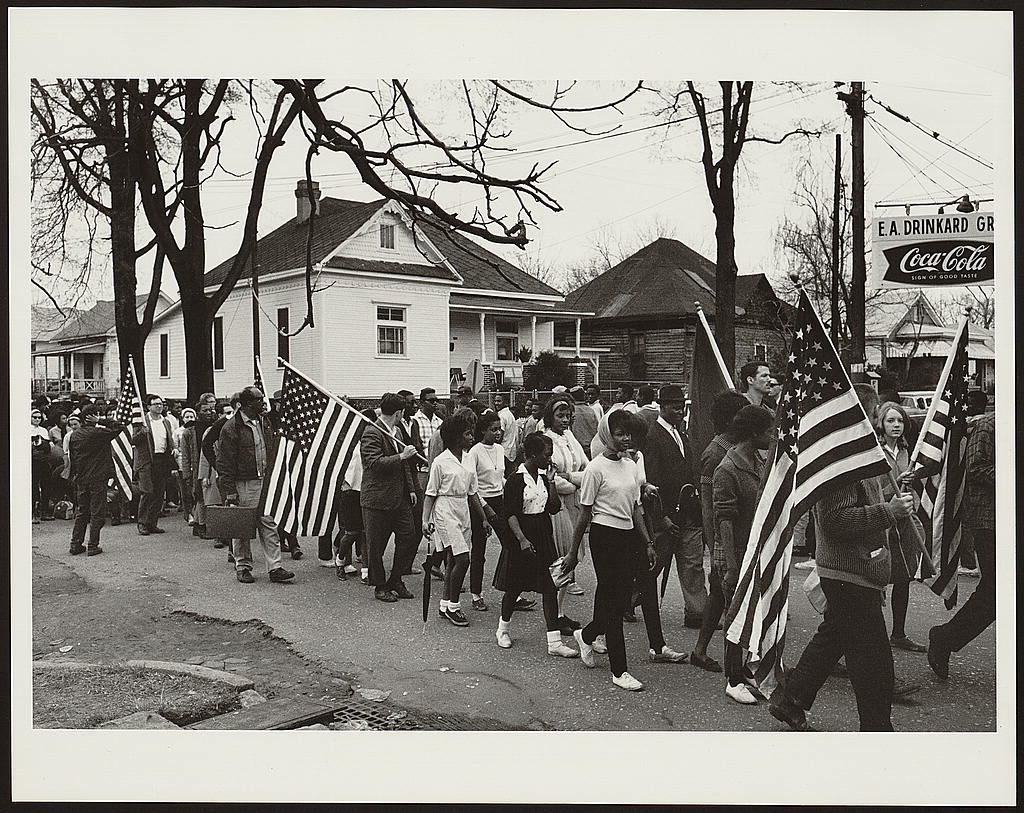
Within weeks, thousands marched from Selma to Montgomery under federal protection.
What changed?
Congress passed the Voting Rights Act, signed August 6, 1965.
What happened next?
Black voter registration rose dramatically across the South.
How could this still matter today?
In 2013, Shelby County v. Holder struck down the formula that decided which states needed federal approval for voting changes.
Evidence & sources
Evidence rating: What the ratings mean
- Speech · March 15, 1965Special Message to the Congress: The American Promise · President Lyndon B. Johnson
Johnson's voting rights address after Selma.Public Papers of the Presidents: LBJ, 1965.
Related stories
- Aug 6, 1965Voting Rights ActIn Mississippi, registration went from 7% to 60%.
- 1965Jimmie Lee JacksonShot by a state trooper.
- Summer 1964Freedom SummerThree organizers vanished.
Cite this page
APAThe Black American Story. (2026). Selma. https://www.theblackamericanstory.com/stories/selma/MLA
"Selma." The Black American Story, 2026, https://www.theblackamericanstory.com/stories/selma/. Accessed [date].
Chicago"Selma." The Black American Story. 2026. https://www.theblackamericanstory.com/stories/selma/.