March on Washington
A quarter million people marched for jobs and freedom. The name matters.
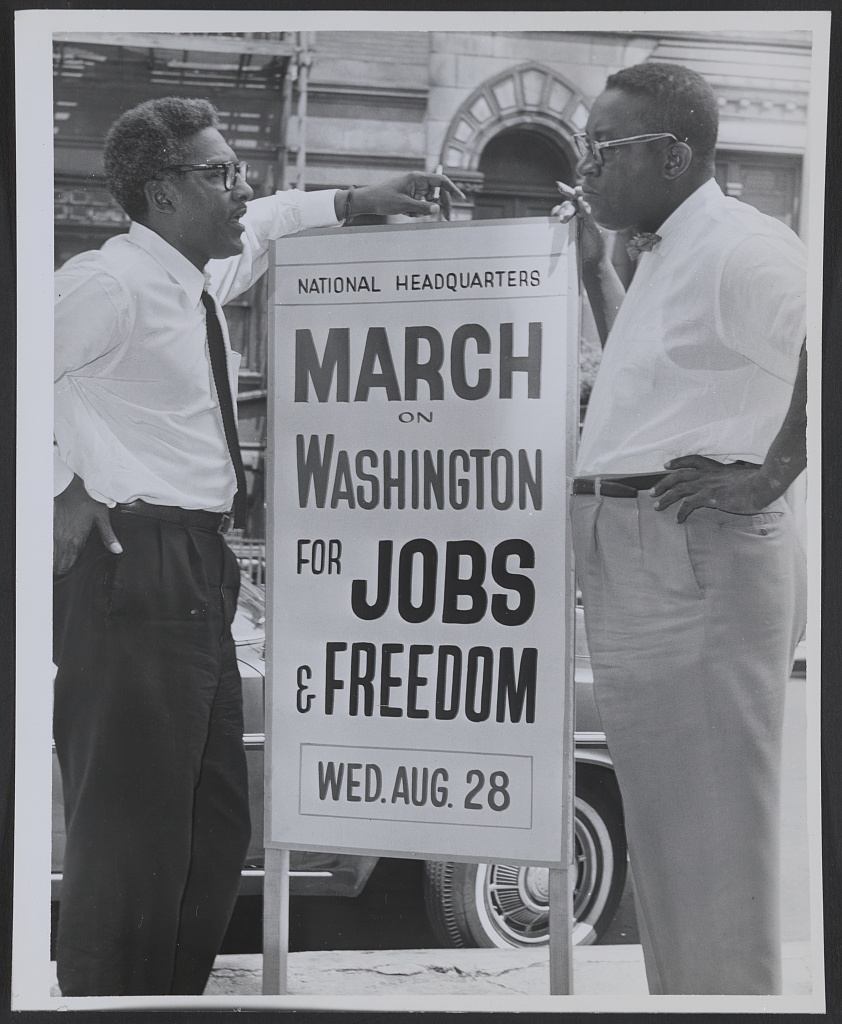
What was happening?
A. Philip Randolph had threatened a march in 1941, winning a ban on discrimination in defense industries (Executive Order 8802).
What happened?
Randolph and Bayard Rustin organized the March on Washington for Jobs and Freedom. Its demands included a $2 minimum wage, a jobs program and an end to job discrimination.
Why?
Civil rights and economic rights were inseparable to its organizers.
How did Black people respond?
Rustin organized the logistics in about two months. Women organizers, including Anna Arnold Hedgeman and Dorothy Height, pushed for women's voices on the program.
What changed?
It built public momentum for the Civil Rights Act.
What happened next?
King's later Poor People's Campaign returned to the economic demands.
How could this still matter today?
Many of the march's economic demands remain unmet.
Evidence & sources
Evidence rating: What the ratings mean
- Program · 1963Official program, March on Washington for Jobs and Freedom · National Archives
Lists the march's demands.NARA, Official Program.
Related stories
- July 2, 1964Civil Rights Act of 1964The effects went far beyond one population.
- April–May 1963Birmingham, 1963The children marched.
Cite this page
APAThe Black American Story. (2026). March on Washington. https://www.theblackamericanstory.com/stories/march-on-washington/MLA
"March on Washington." The Black American Story, 2026, https://www.theblackamericanstory.com/stories/march-on-washington/. Accessed [date].
Chicago"March on Washington." The Black American Story. 2026. https://www.theblackamericanstory.com/stories/march-on-washington/.