Convict Leasing
Southern states leased mostly Black prisoners to private companies, where thousands died.
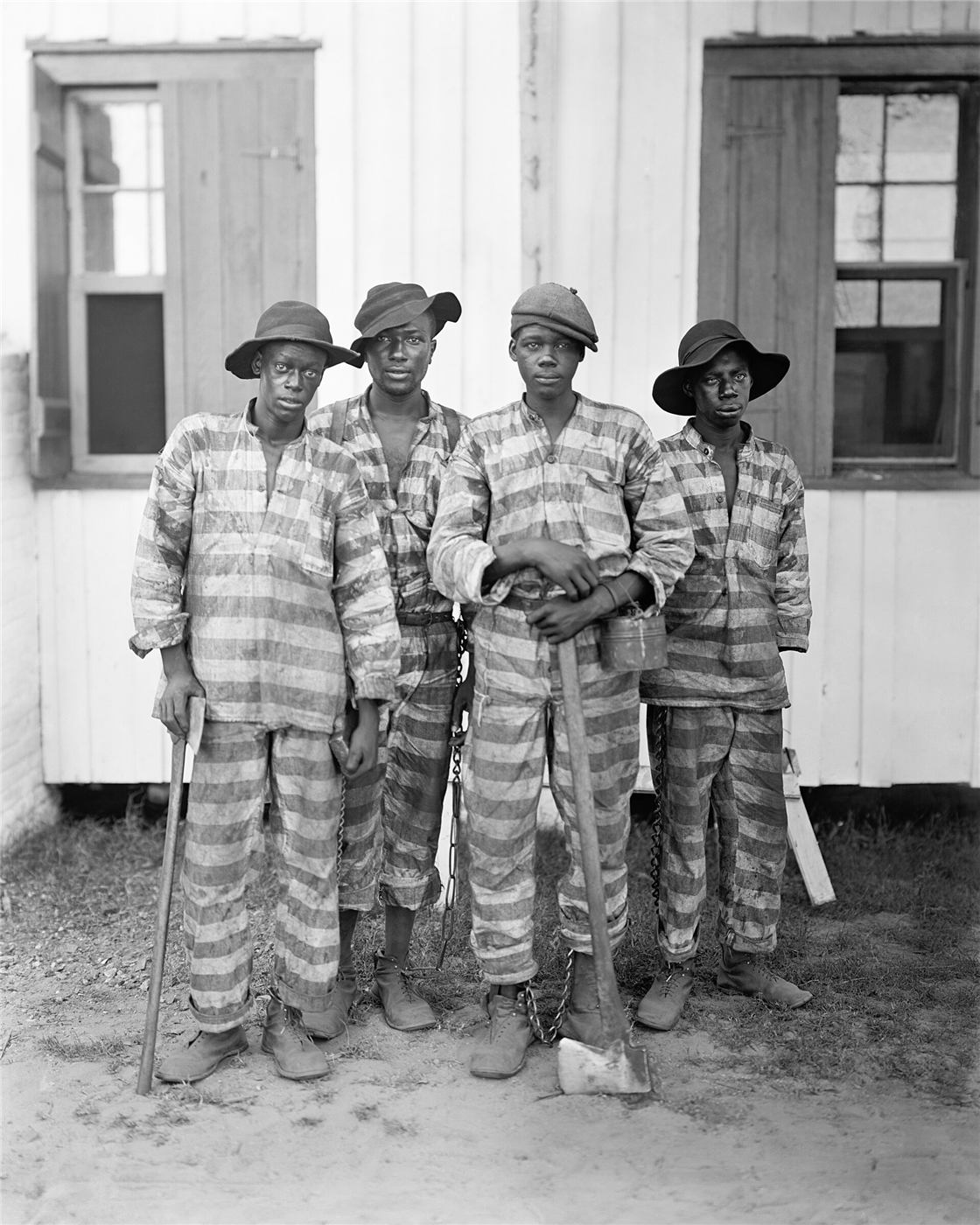
What was happening?
The 13th Amendment allowed involuntary servitude as punishment for crime. Southern states had little prison capacity and wanted revenue.
What happened?
States leased prisoners to coal mines, railroads, plantations, lumber and turpentine camps. Death rates were extremely high. Many prisoners were arrested for minor offenses like vagrancy or gambling.
Why?
Leasing generated revenue for states and counties and cheap labor for industry.
How did Black people respond?
Prisoners resisted and escaped. Black newspapers and reformers, including Ida B. Wells and Frederick Douglass, condemned the system. Free miners struck against convict labor in Tennessee in the 1890s.
What changed?
States slowly ended leasing; Alabama was the last, in 1928.
What happened next?
Leasing gave way to state-run chain gangs and prison farms like Mississippi's Parchman.
How could this still matter today?
Prison labor under the 13th Amendment exception continues, now mostly within state systems.
Evidence & sources
Evidence rating: What the ratings mean
- Scholarship · 2008Slavery by Another Name · Douglas A. Blackmon
Pulitzer Prize-winning archival history of convict leasing.Blackmon, Doubleday, 2008.
Related stories
- 186513th AmendmentRead the exception.
- 1865–1866The Black CodesUnemployed? You could be arrested.
- 1986–2010Crack vs. PowderSame drug. Very different punishment.
Cite this page
APAThe Black American Story. (2026). Convict Leasing. https://www.theblackamericanstory.com/stories/convict-leasing/MLA
"Convict Leasing." The Black American Story, 2026, https://www.theblackamericanstory.com/stories/convict-leasing/. Accessed [date].
Chicago"Convict Leasing." The Black American Story. 2026. https://www.theblackamericanstory.com/stories/convict-leasing/.