Maggie Lena Walker
The daughter of a formerly enslaved woman founded a bank that survived the Great Depression.
What was happening?
White-owned banks often refused Black customers or treated them poorly. Black mutual aid societies were already pooling money.
What happened?
Walker led the Independent Order of St. Luke, a mutual aid society, and in 1903 chartered the St. Luke Penny Savings Bank, becoming the first woman of any race to charter a U.S. bank.
Why?
To keep Black savings in the community and finance Black homes and businesses.
How did Black people respond?
The bank made mortgages to Black families, financed businesses, and hired Black women. Walker also ran a newspaper and a department store.
What changed?
Hundreds of Black families bought homes with its loans.
What happened next?
The bank merged into the Consolidated Bank & Trust Company in 1930 and survived the Depression; it operated for decades.
How could this still matter today?
Black-owned banks and credit unions still play an outsized role in lending to Black households.
Evidence & sources
Evidence rating: What the ratings mean
- Historic site · Maggie L. Walker National Historic Site · National Park Service
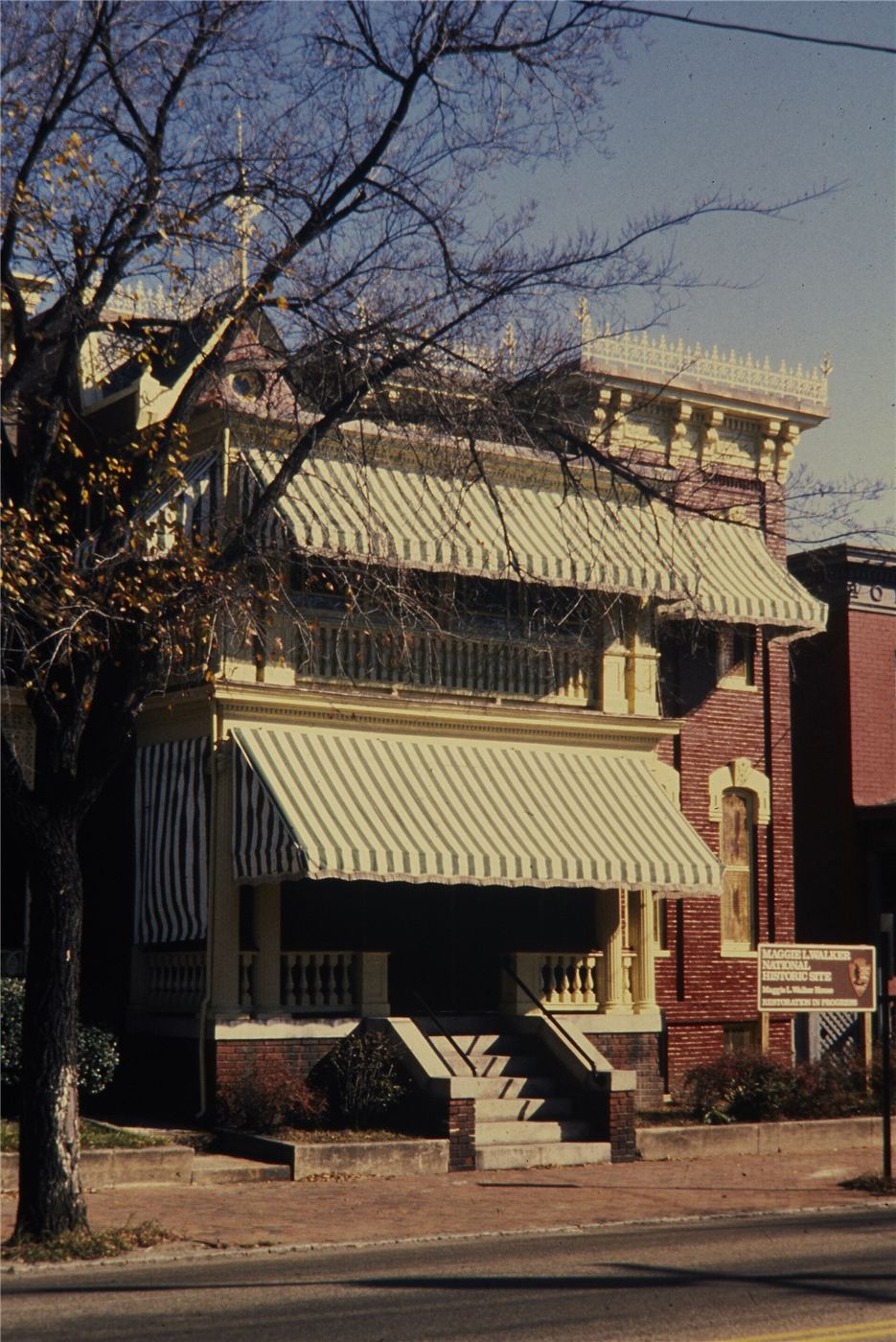
Her home in Richmond.NPS, Maggie L. Walker NHS.
Related stories
- 1865–1874Freedman's Savings BankThey saved. The bank failed them.
- May 31–June 1, 1921Black Wall StreetThey built it. Then it burned.
- 1877–1910sBlack TownsEntire towns, built and governed by Black people.
Cite this page
APAThe Black American Story. (2026). Maggie Lena Walker. https://www.theblackamericanstory.com/stories/maggie-walker/MLA
"Maggie Lena Walker." The Black American Story, 2026, https://www.theblackamericanstory.com/stories/maggie-walker/. Accessed [date].
Chicago"Maggie Lena Walker." The Black American Story. 2026. https://www.theblackamericanstory.com/stories/maggie-walker/.